
Forever and Ever

Hi everyone! This post is the second in a series documenting the development of my next game, Adventures in Fantasyland. Click here for my first devlog and here for a rundown of the game’s predecessor Cartoodle. Today I’m going to talk about the world of the game and why I decided to make it.
Legoland and the Human Experience
Cartoodle starts with a blank canvas and gradually becomes a festival of people and places as players add to the world.
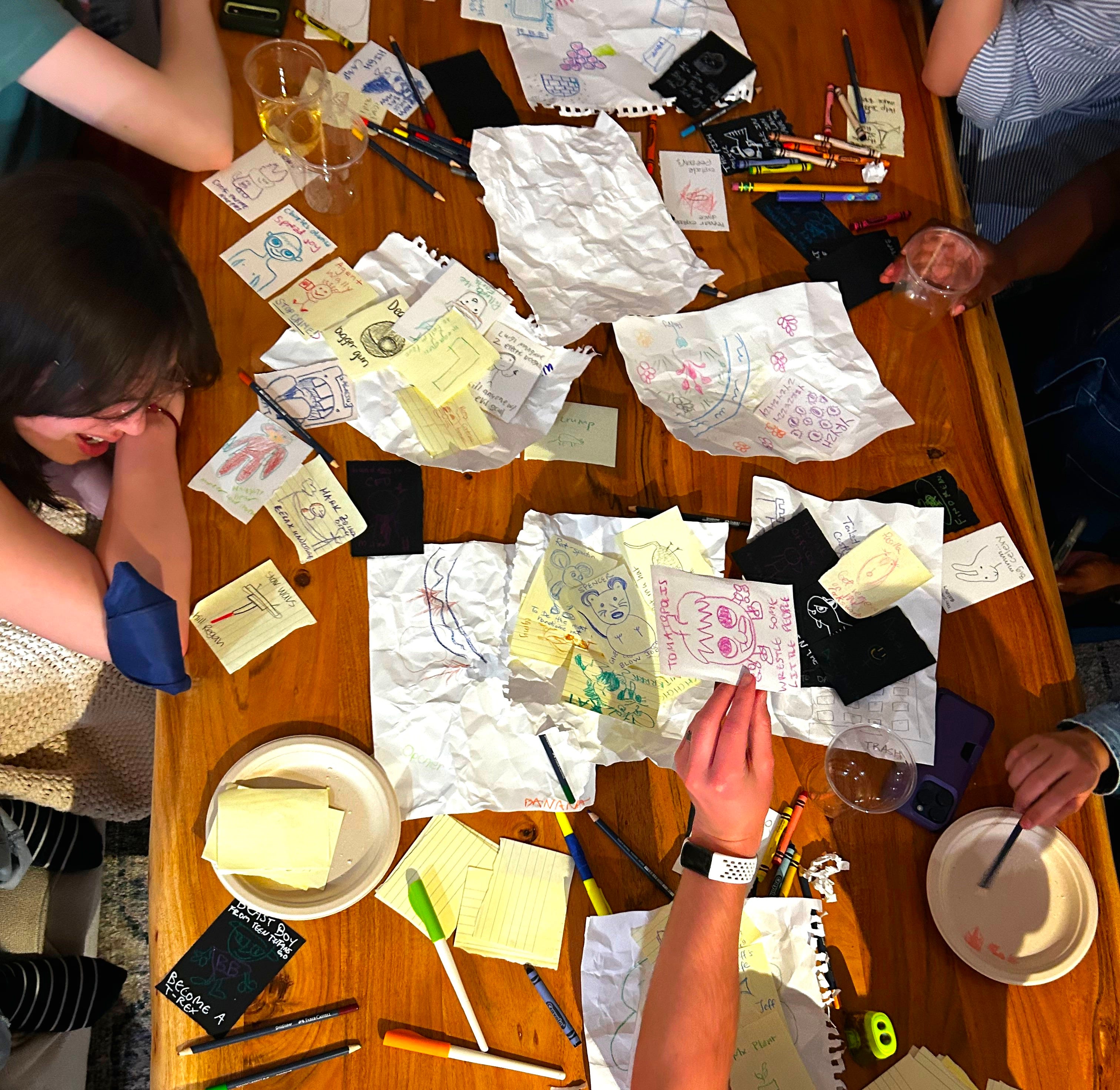
On your turn, you can do anything you want to continue the story. For example, “There’s a pool here because three turns ago you made a goldfish who wanted to ‘pee in the pool’ so I made a pool so the goldfish could pee in it.”
Roleplaying games have the unique ability to operate on this kind of “yes, and” causality, but players used to more linear forms of storytelling might eventually wonder how this kind of world works when we’re not looking. So the most basic question I want Fantasyland to answer is: How do you create an environment where it makes sense that anything can happen?
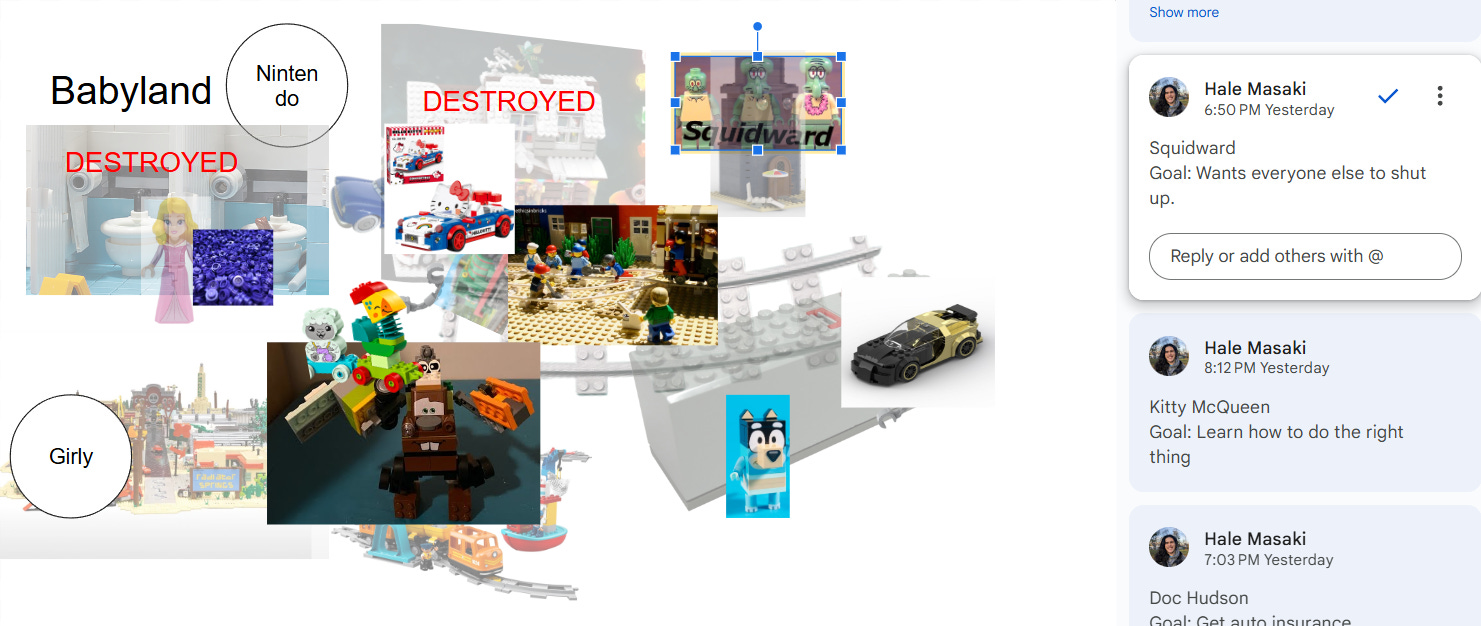
My first attempt at creating this kind of world was to set consecutive games of Cartoodle in a Lego universe where characters come different genre-flavored dimensions.
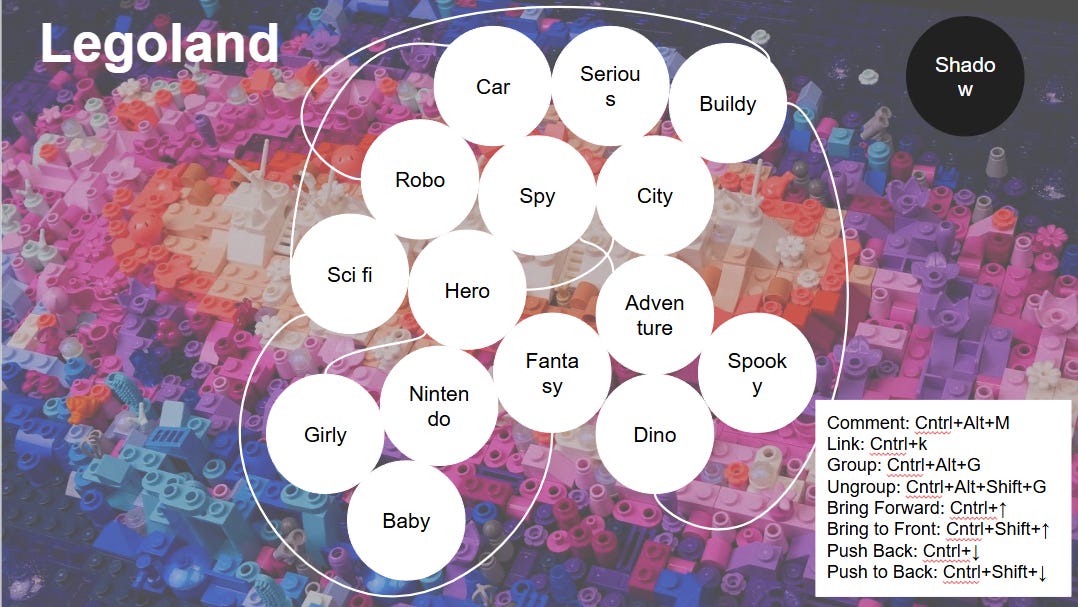
I hoped that having an established setting would lead to creating persistent characters who could link episodes together.
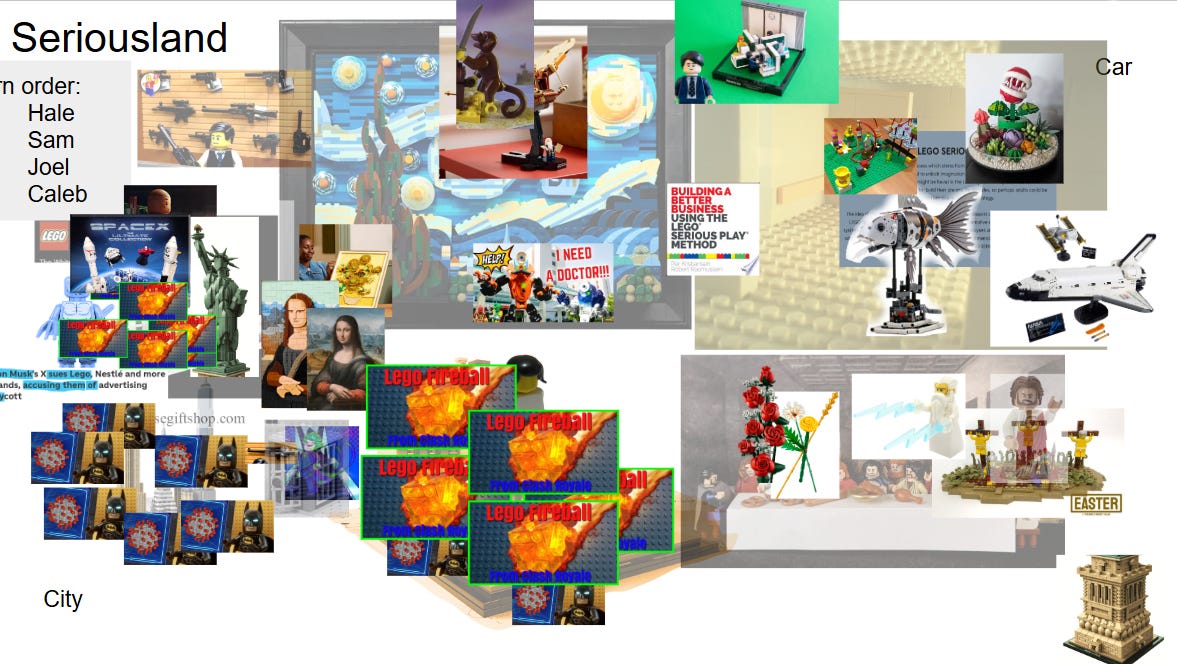
But because a game of Cartoodle typically has seven to ten simultaneous plotlines by the end, it can be hard to remember what happened last week. Let’s just start with a clean slate instead!
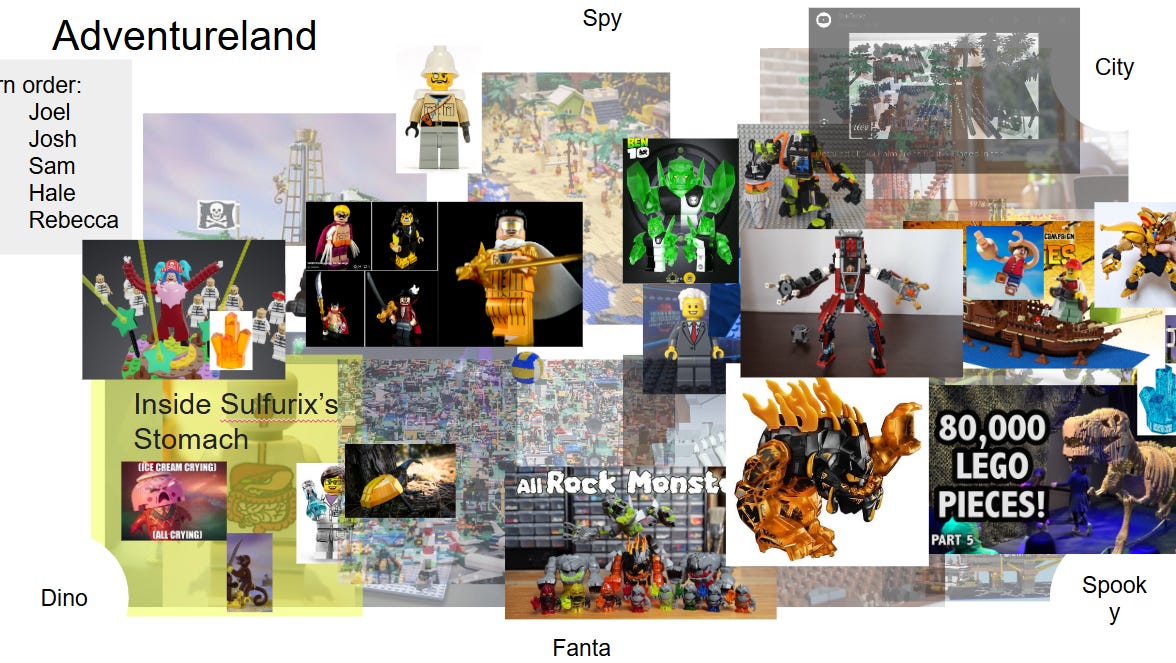
Eventually I realized that I needed a setting and a system designed to support each other. To learn about this we turned to a game called Wanderhome, where you play as fantasy animal people traveling the countryside.
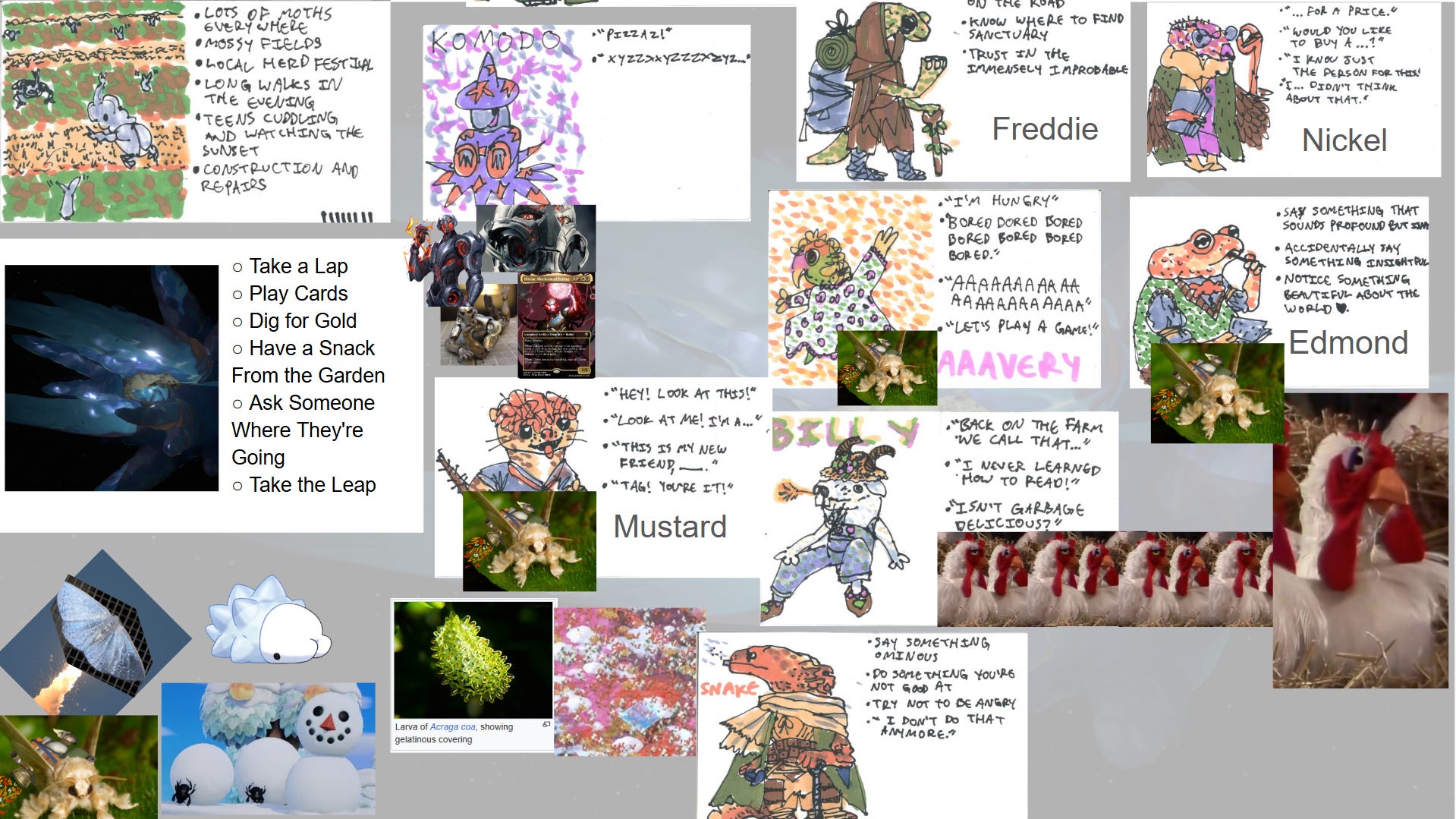
At the beginning of every episode, you create the location the characters are about to explore. Looking at Wanderhome’s location generator can give us an idea of how the designers want you to feel while playing the game. ↓
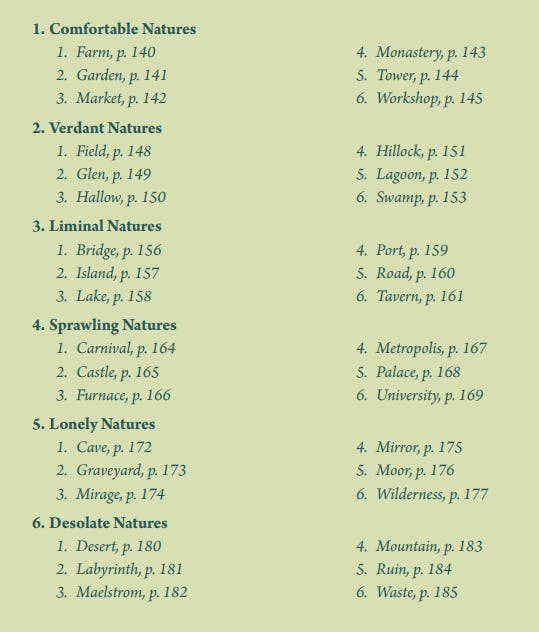
The game as written is mostly sad and quiet, and sometimes wondrous and pastoral. Alas…
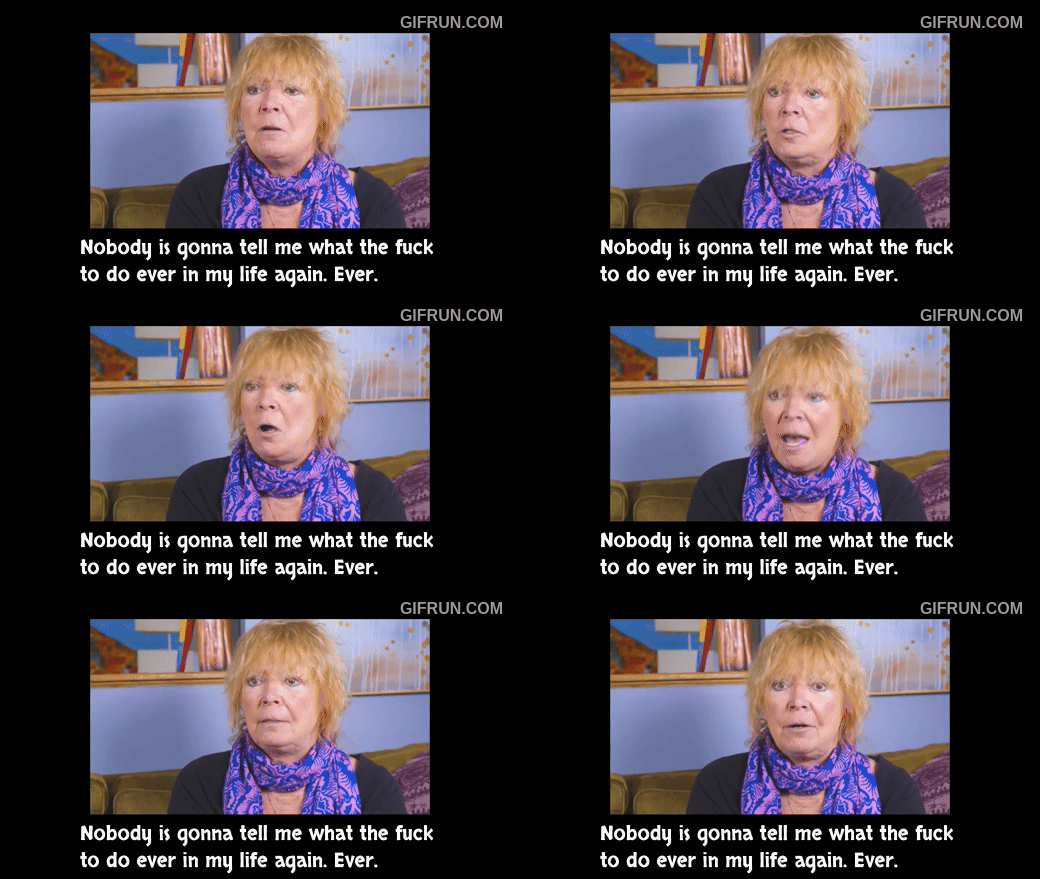
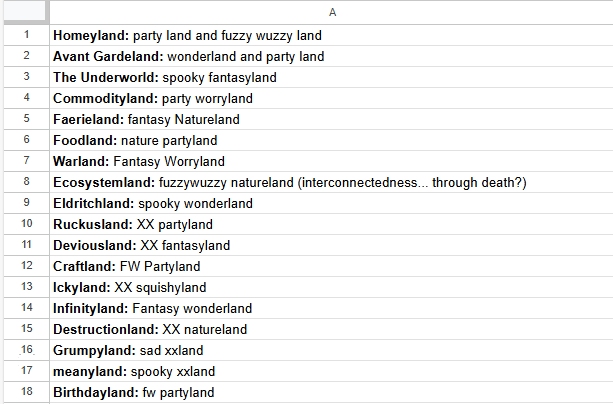
So I spent most of my prep time in between Wanderhome sessions trying to figure out how to turn a sad-type world into one designed to party. This started with revising the original material. ↓
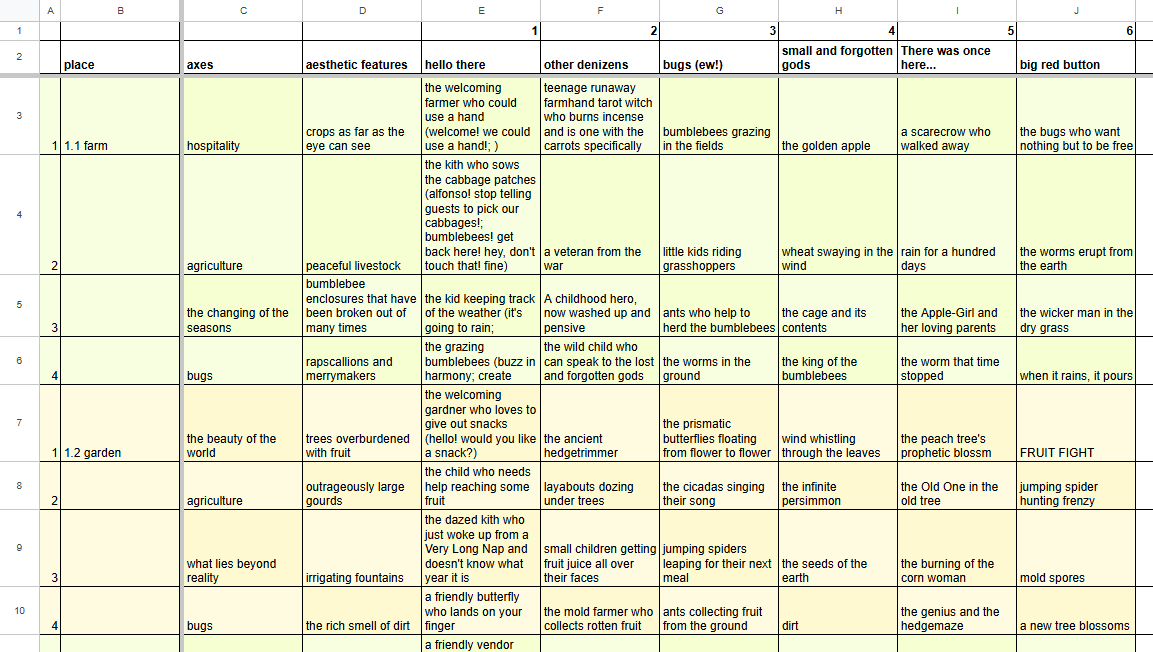
Eventually I started writing my own locations from scratch. ↓
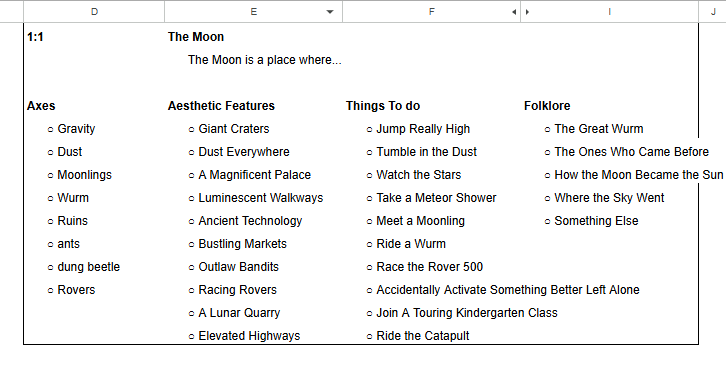
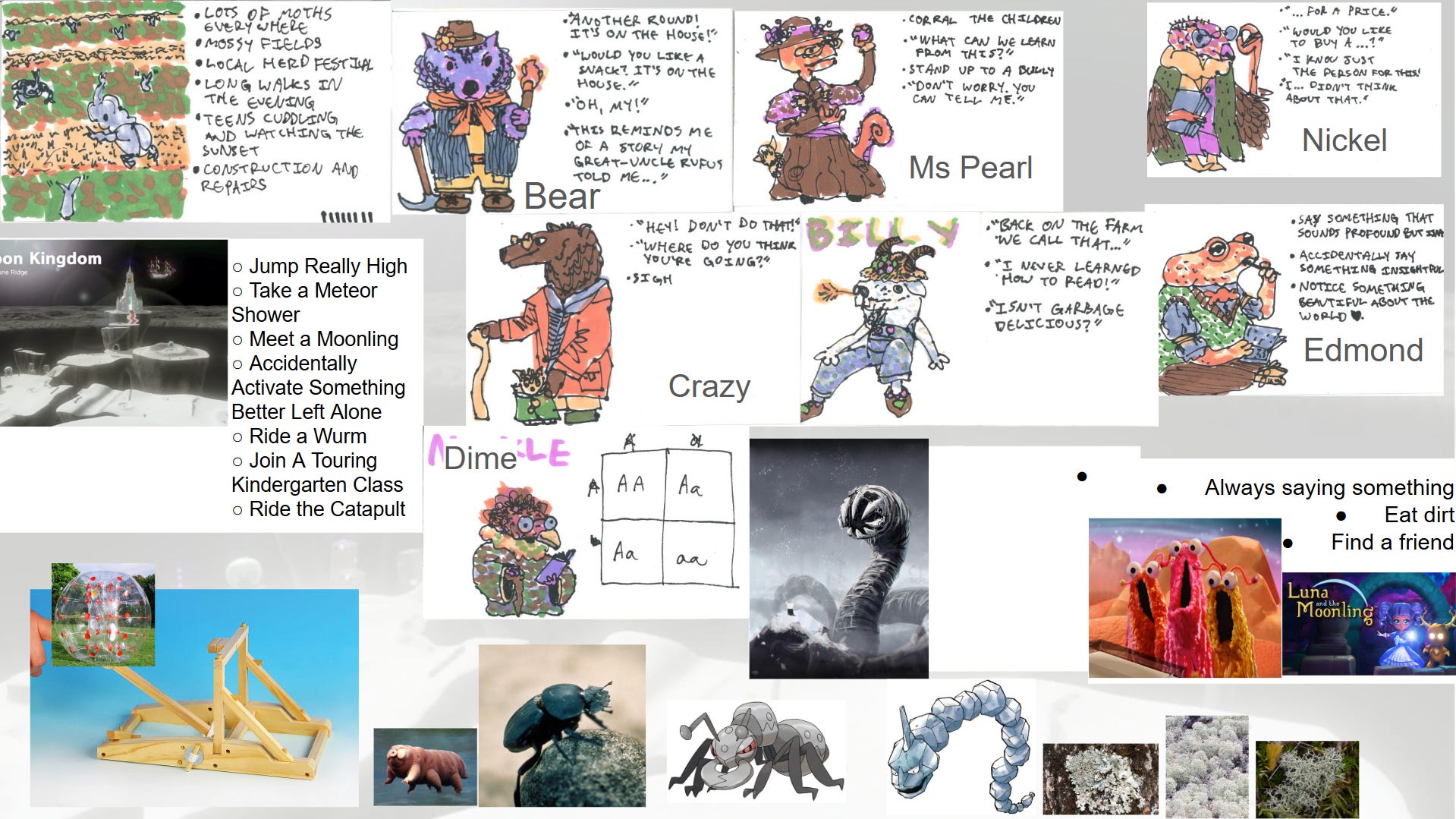
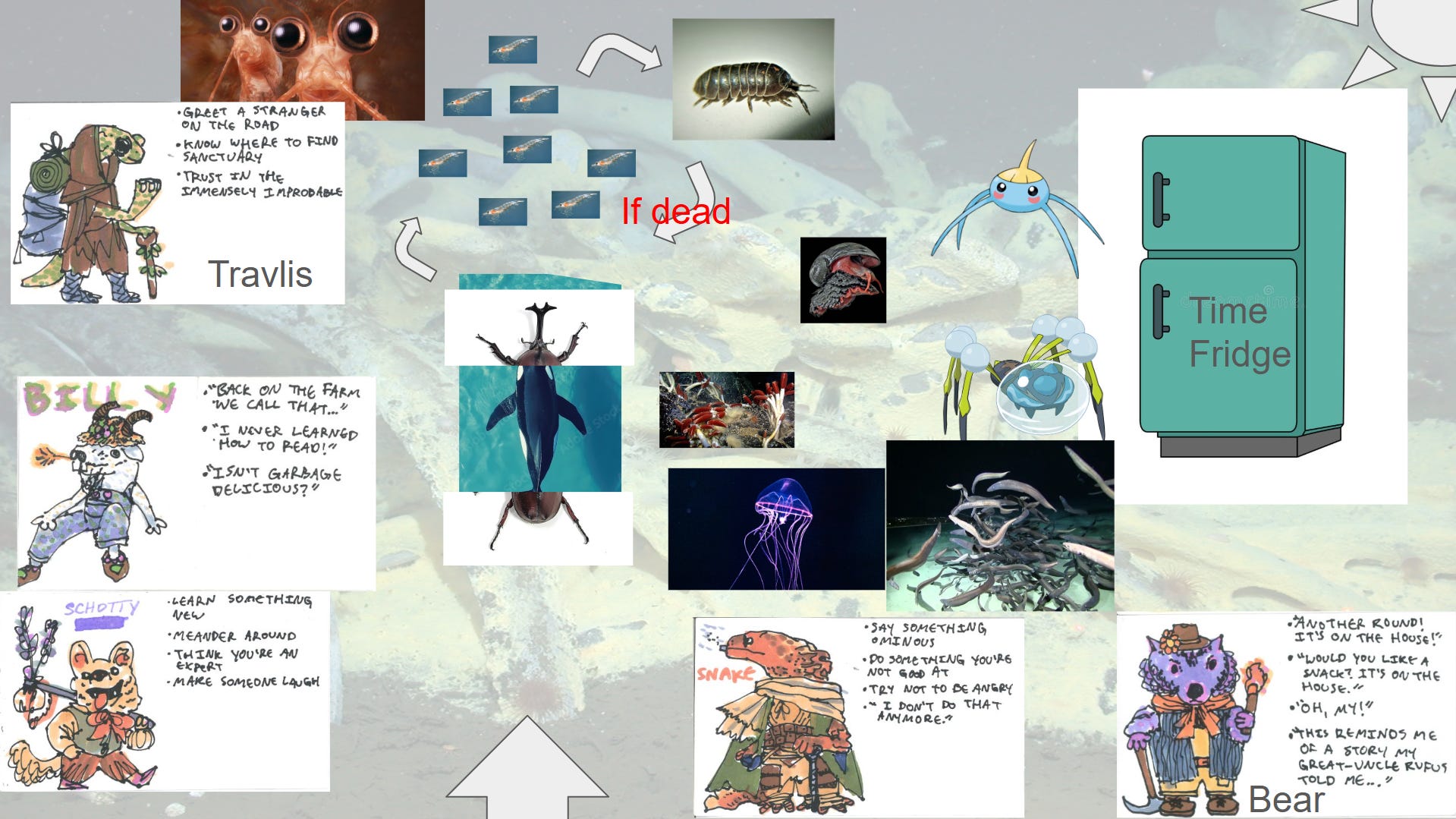
We had a lot of fun when my writing was effective, but I got tired of reworking something meant for melancholy. Eventually I realized that if I wanted a world designed to party, it’d just be easier to make it myself.
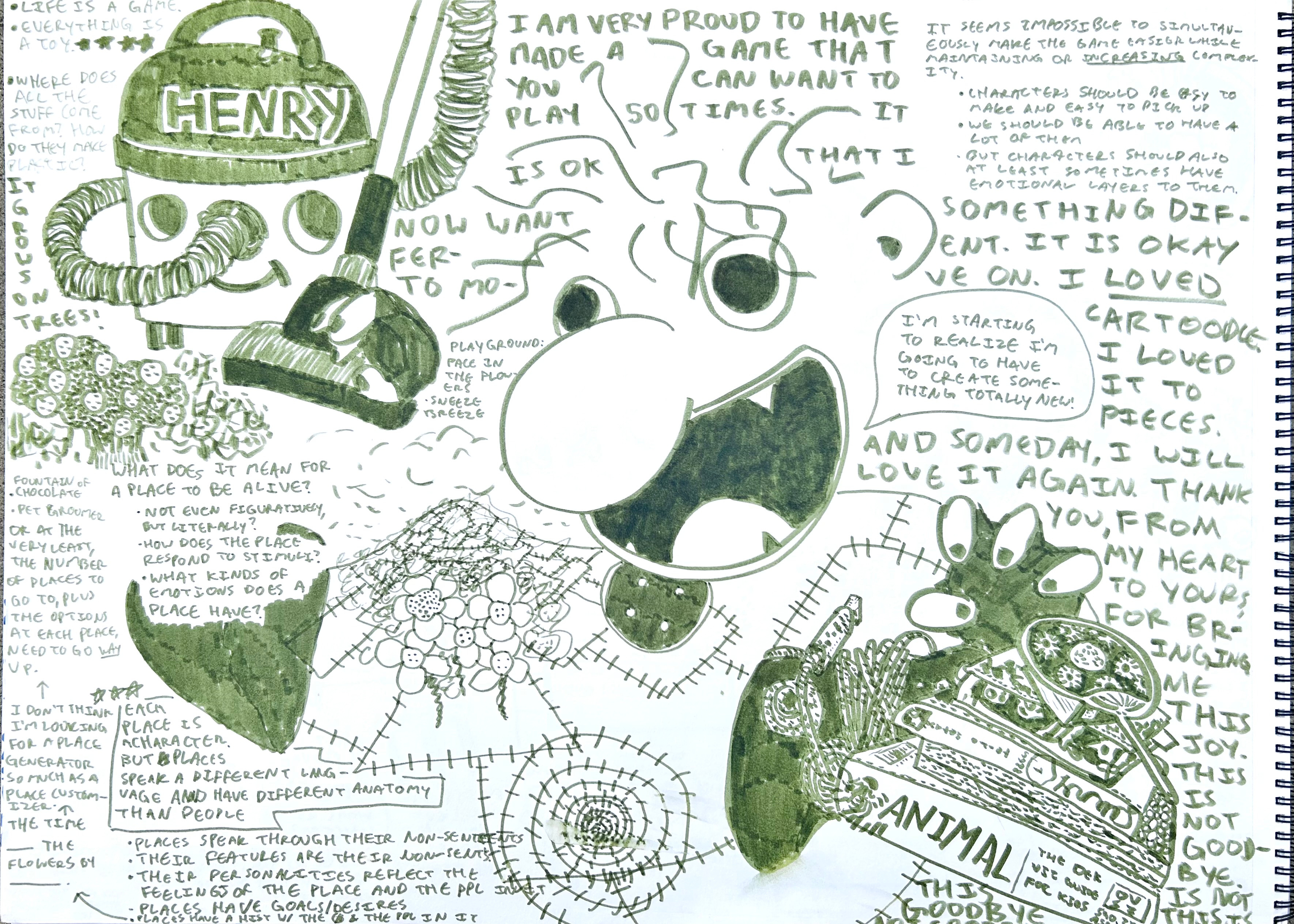
My first idea in this direction was a world filled with sentient toys and crafted landscapes. Knowing that I wanted a setting with more than one kind of landscape, I tried to figure out what the different regions of the world would be.
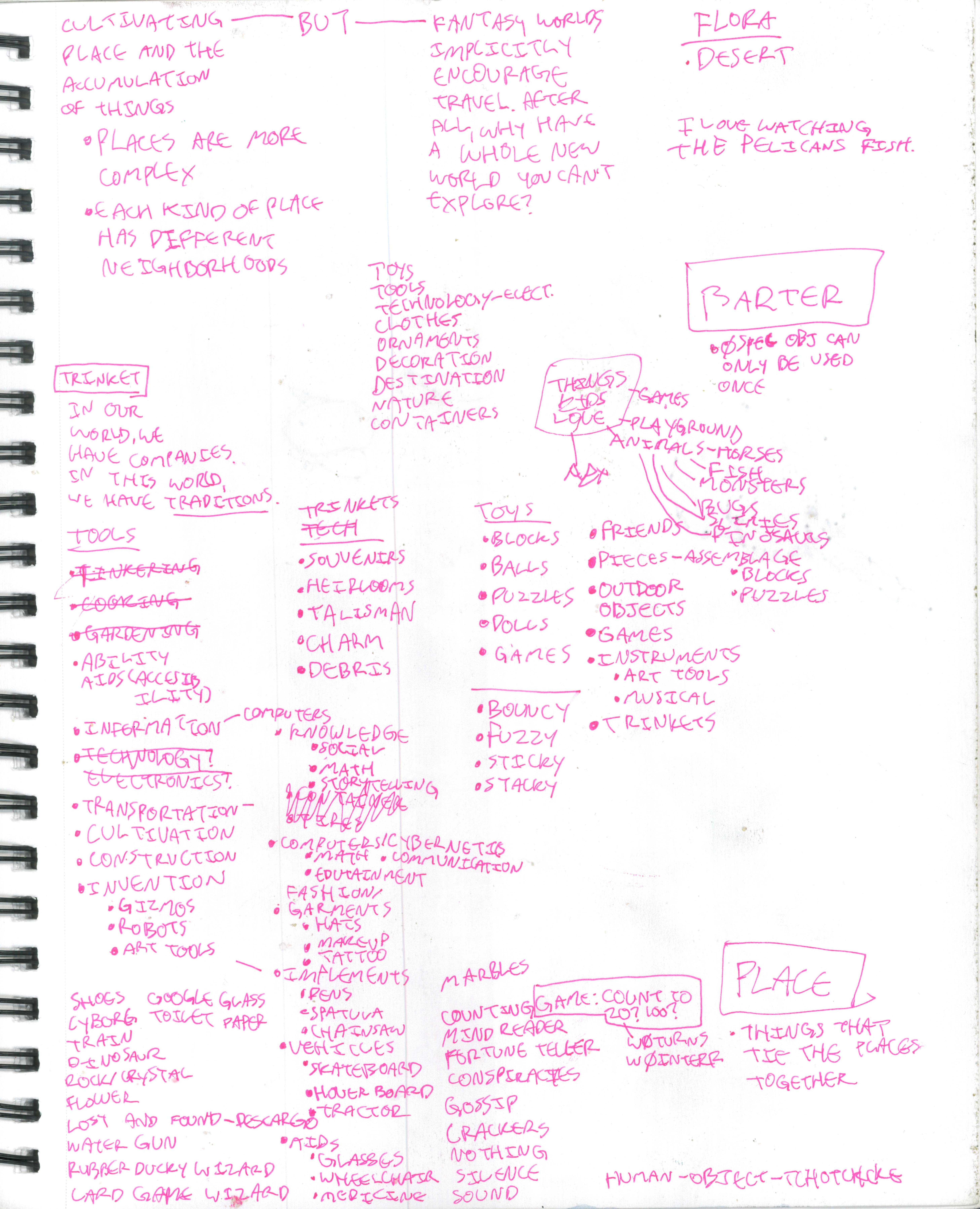
As much as I love toys, I felt like something was missing. Where do all the toys come from? Who makes the felt? If there are vacuums, is there dirt to clean up? Are there vacuum factories? Where does all of this plastic come from? Will this world ever run out of petroleum?
Wait a minute! I can combine the place-as-emotion approach from Wanderhome with the place-as-genre scheme from Legoland! Toyland could be just one of several dimensions all designed to party in different ways!
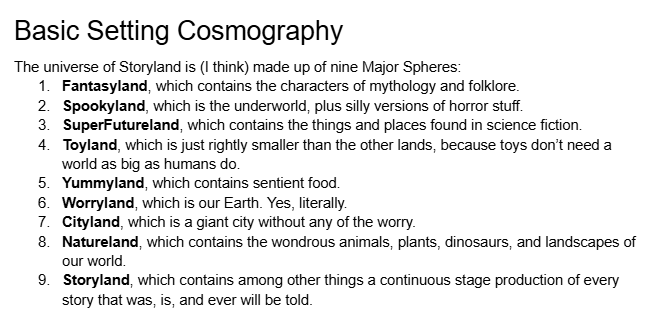
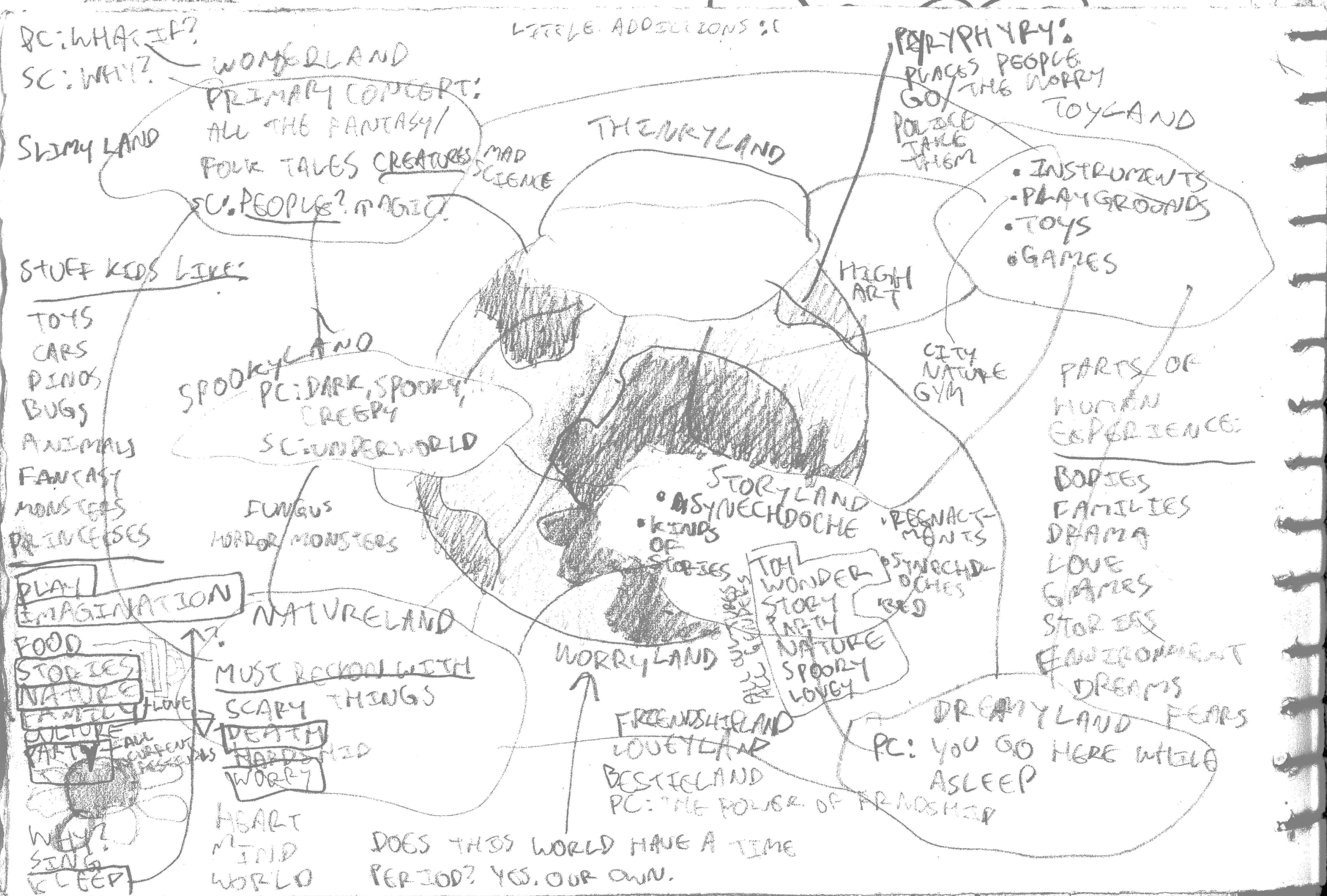
Eventually I realized that not accounting for our “negative” emotions would overlook a huge part of the human experience, so I added Sadland, Quietland, and Deviousland to the mix. Below are the current iteration of symbols for the game’s twelve dimensions, called Lands.
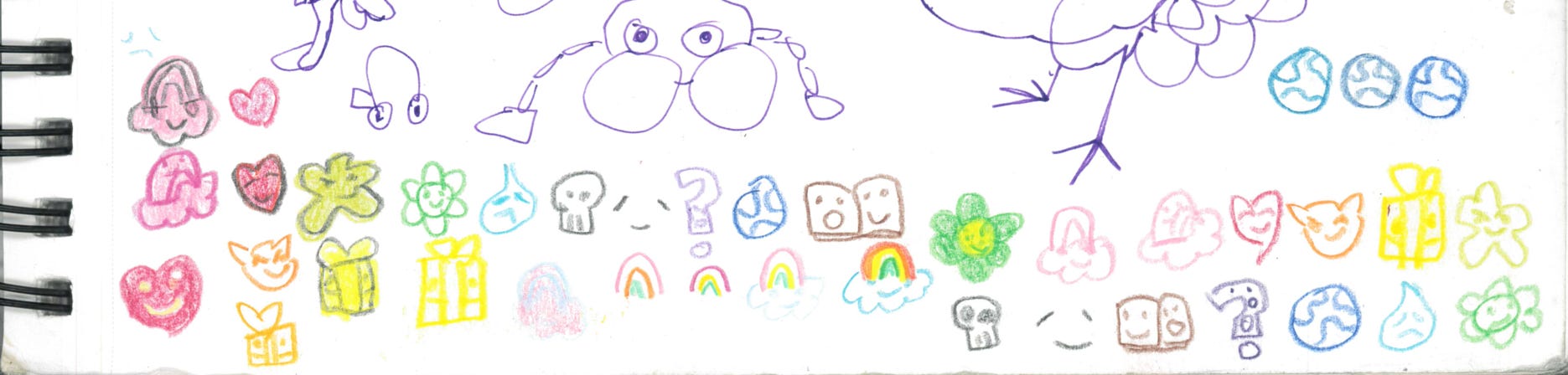
Each Land has its own domain:
Fantasyland: imagination, myth, whimsy, joy
Fuzzywuzzyland: friendship, love, community
Deviousland: this might become Angryland
Partyland: creativity, objects, parties
Ickyland: gross things, derp
Natureland: nature
Sadland: sadness
Worryland: our slice of the world, anxiety, desolation
Wonderland: curiosity, hypothesis, experimentation
Storyland: ;P
Spookyland: death, fear, spooky stuff
Quietland: a nice place to sit down and rest for a while
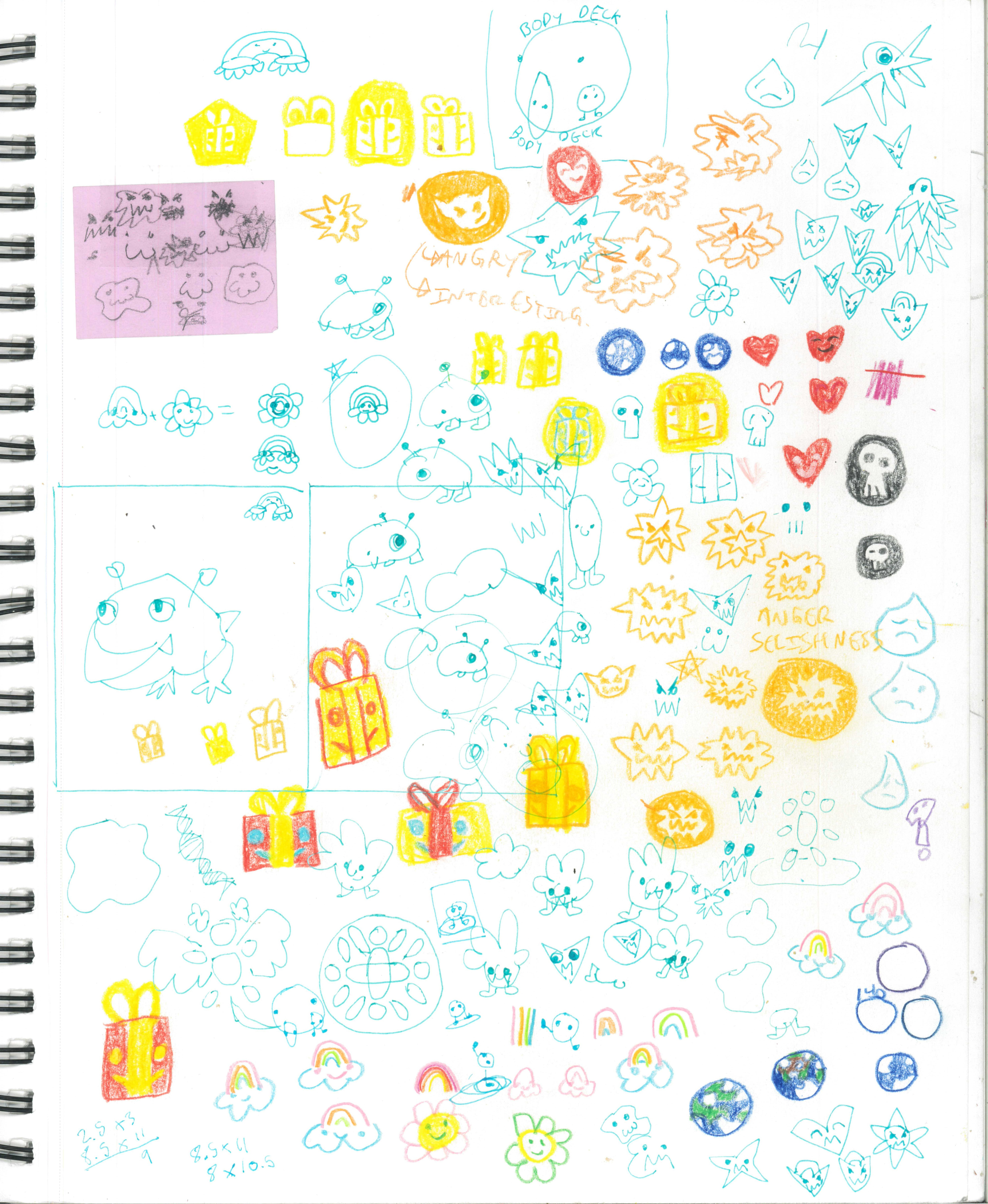
The Lands all simultaneously overlap, like if you had a twelve-dimensional Venn diagram.


But instead of asking anyone to visualize twelve-dimensional space, we’ll instead use…
The 66 Intersections
Basically if you have twelve things and pick two of them at a time you get 66 different combinations. Each combination is like a regular two-category Venn diagram with a different Land on each side.
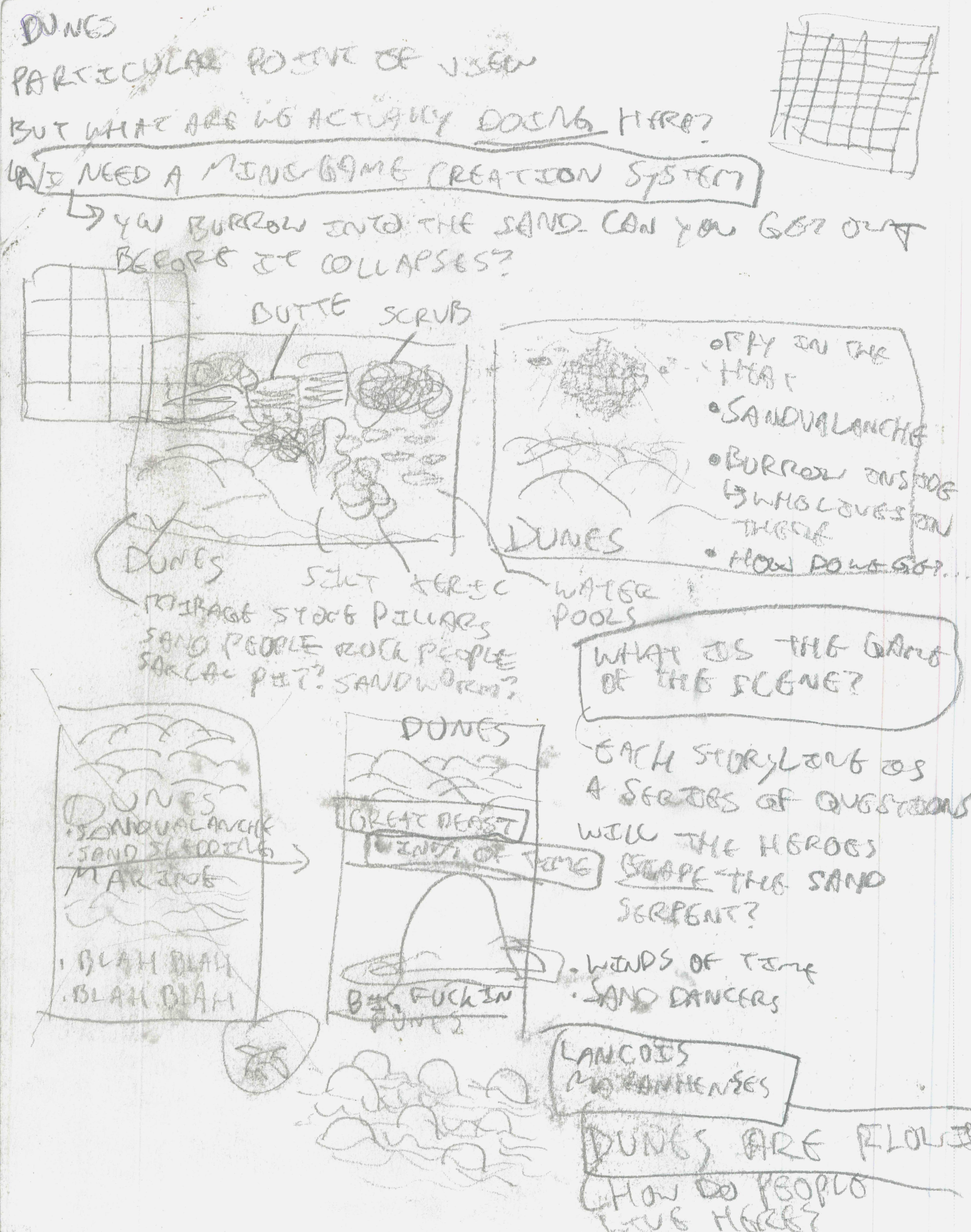
Each Land and Intersection will probably have its own way of randomly generating people and places who live there.
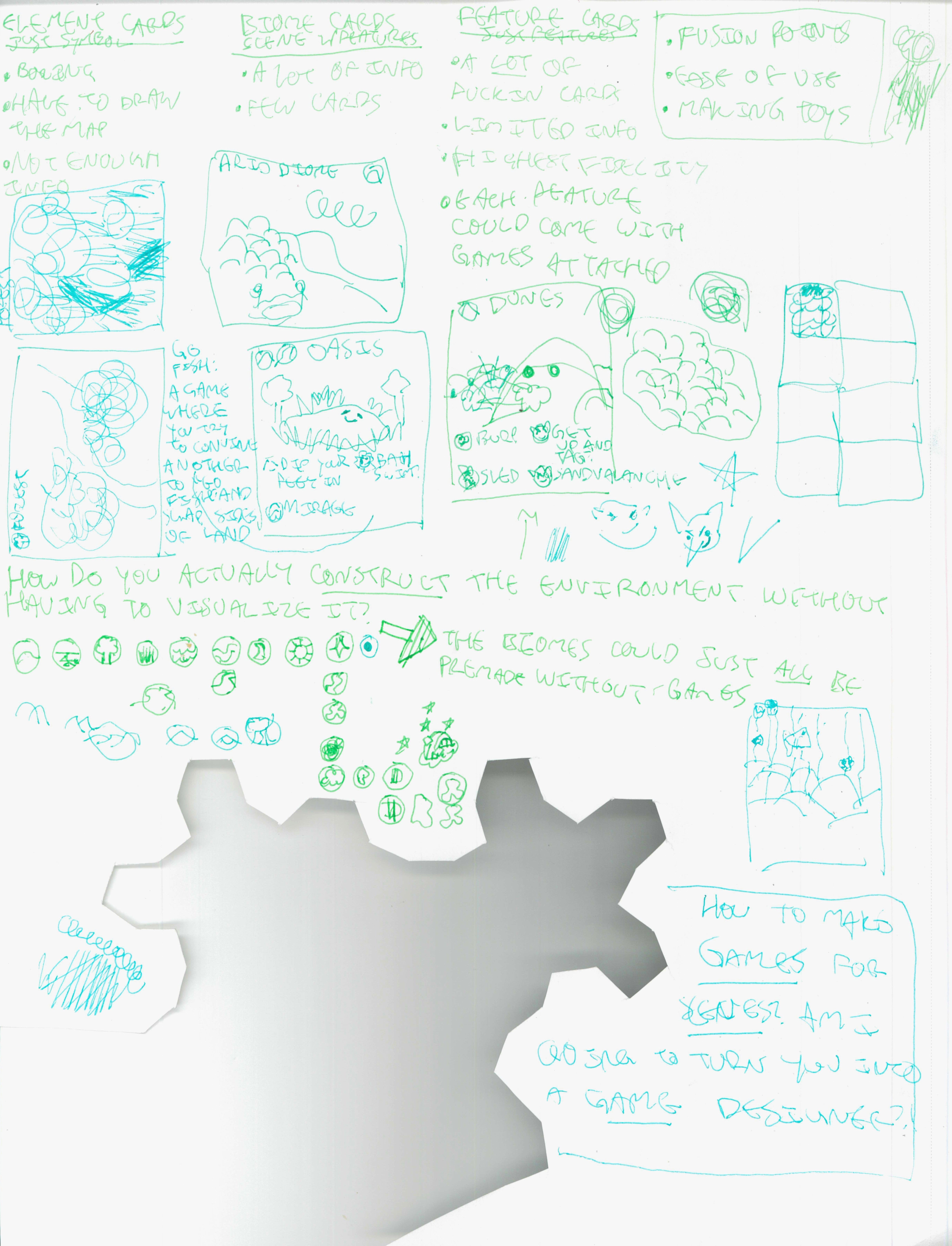
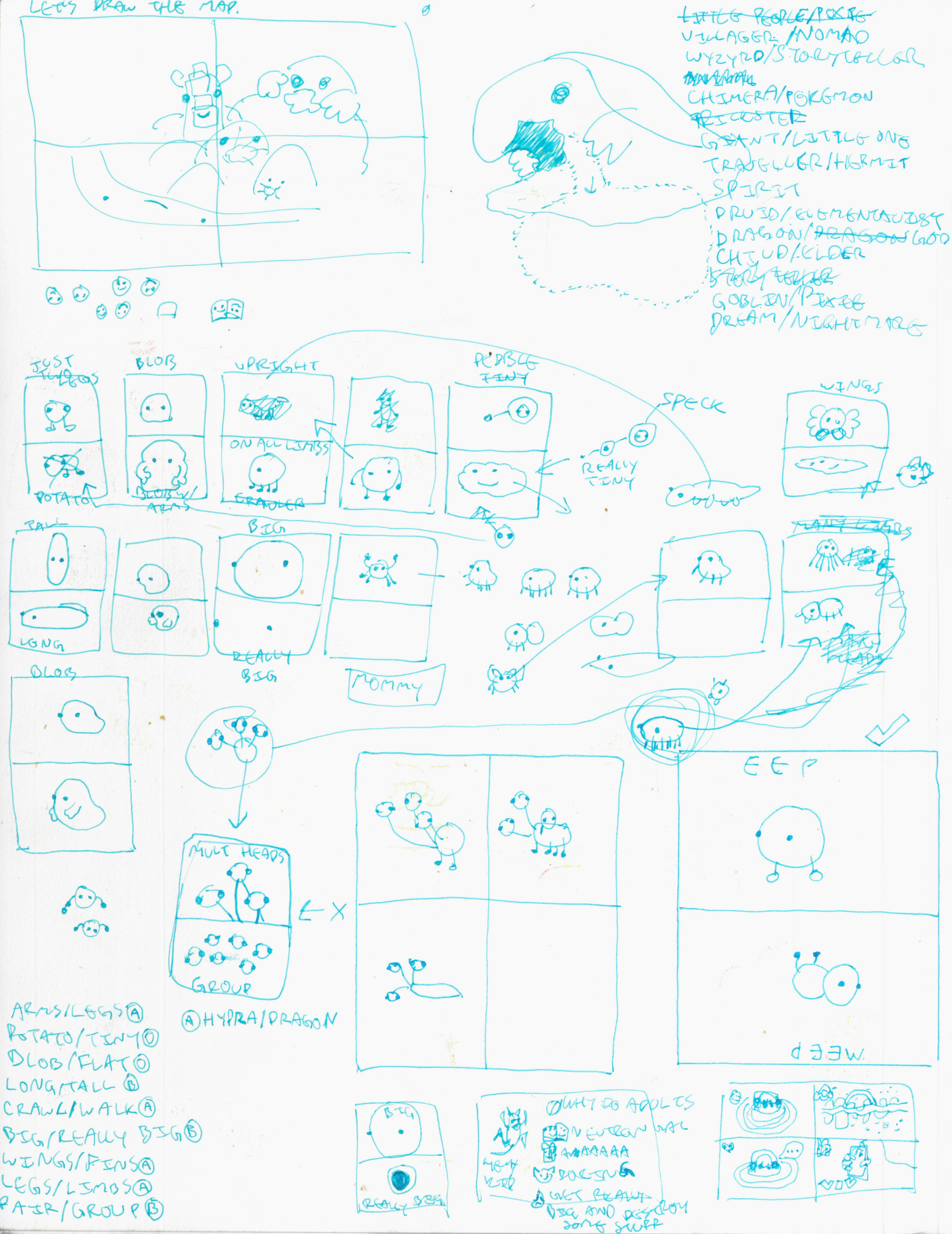
Even though a lot of stuff is under construction, it’s already been a lot of fun to answer people’s questions about Fantasyland and imagine what happens there. Thanks for tuning in, and next time we’ll probably look at dice!
BONUS MANGA
Total Research Count for the Game: 7 books/articles and 9 games
Books (at least partially) read since last count:
Ecoregions: the ecosystem geography of the oceans and continents, Robert Bailey
The Grasshopper, Bernard Suits
UCB Training Manual
The Road to Middle Earth, Tom Shippey
Playing at the World 2E Volume 1, John Peterson
Playing at the World 2E Volume 2, John Peterson
Anarchy in political philosophy
Games (at least partially played) since last count:
Legoland
Wanderhome
Yazeba’s Bed and Breakfast
The Legend of Zelda (the first one)
The Legend of Zelda: Breath of the Wild
Outer Wilds
Animal Forest
Chrono Trigger
Pokémon Red